Building a Real-Time Construction Platform: SignalR, Interactive Gantt, and Blueprint Annotation
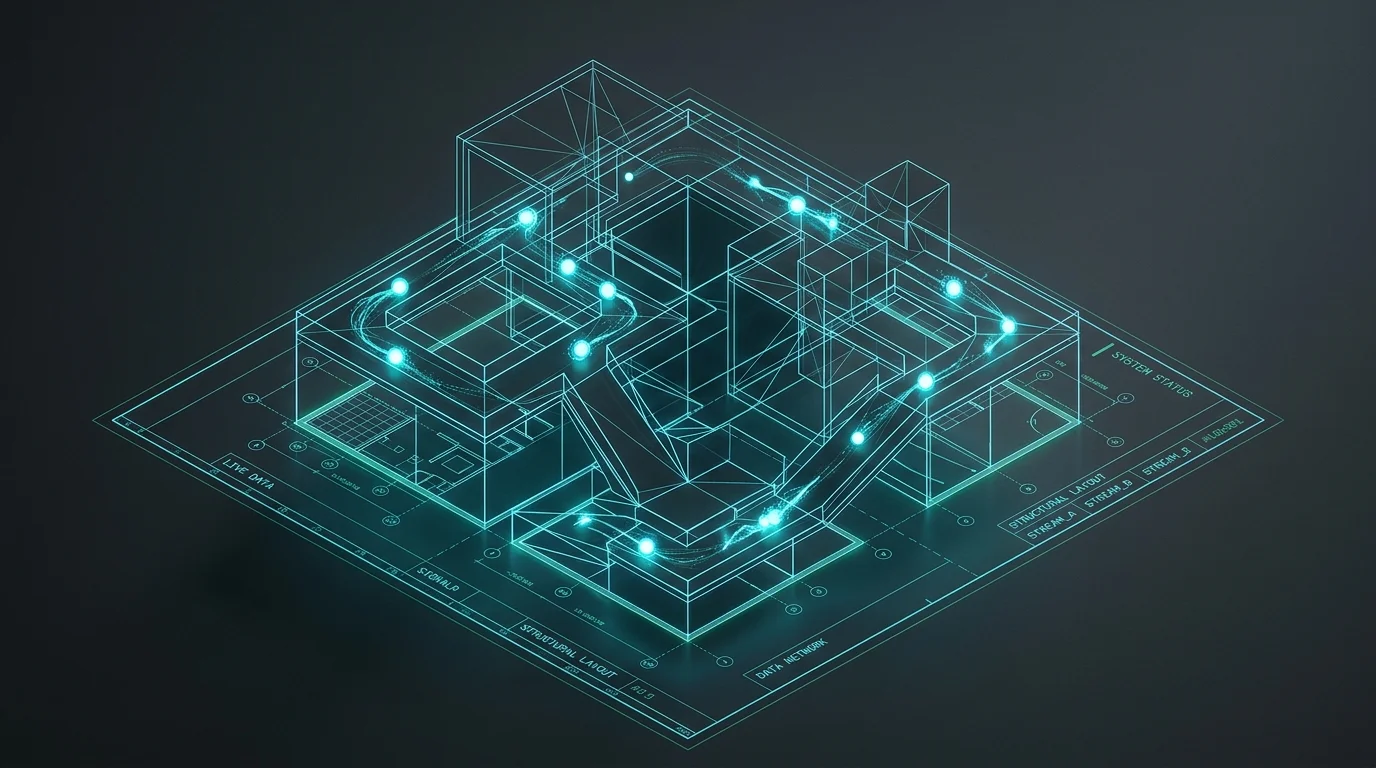
A blueprint revision that reaches the field two days late is a conduit run in the wrong wall. Here is the architecture behind Kaleox, a real-time construction operations platform for field crews, subcontractors, and project managers.
The Chaos of Fragmented Construction Operations
A commercial job site runs on coordination that has to happen faster than email. Contractors, structural engineers, electricians, and crane operators all need the same answer about a deadline, an inspection, a delivery window, or a drawing revision, and they need it now rather than in the morning summary.
Most of the industry still runs on desktop software that does not sync, paper drawings marked up in pen, and that morning summary.
What this costs:
Rework. A crew works from last week's PDF and runs conduit through a wall that moved. Relocating it costs far more than the drawing revision would have.
Silent slippage. Dependencies slip between weekly Gantt updates, so the delay is discovered a week after it started.
Receiving gaps. Expensive material arrives with no manifest and no crane booked to move it.
We were commissioned to build Kaleox, a web platform that puts scheduling, blueprint collaboration, and field communication in one place and keeps them in sync.
UI 1. Field Client Surface • Next.js PWA iPad / Mobile / Web • HTML5 Canvas & SVG Vector Blueprints • Virtualized DOM Gantt 5,000+ Tasks → | Bi-Directional WebSockets | HUB 2. SignalR Orchestrator • Ephemeral Presence & Live Cursors • Real-Time Task State Delta Broadcasts • CRDTs Conflict-Free Replicated Data → | Event Persistence | DB 3. Distributed Backplane • PostgreSQL Spatial CAD Geometry • Redis Pub/Sub Cluster Multi-Node
Rendering diagram...
1. Real-Time Collaboration with SignalR & WebSockets
When a project manager drags a milestone or a safety inspector flags a structural column, that change has to reach every device watching the same job site before anyone acts on stale information.
We used SignalR over WebSockets with a Redis pub/sub backplane:
Server-side latency under 50ms. That is the hub's own dispatch time. What a tablet actually sees depends on the cellular link, and on a job site that link is the variable that matters.
Automatic fallback. Degrades to Server-Sent Events or long polling when a site's network blocks WebSocket upgrades, which happens more often than you would expect.
Room-scoped subscriptions. A device joins only its own job site channel (site_id:204), so it is not paying cellular data for other sites' traffic.
Kaleox's drawing viewer was the hardest part of the build. Construction blueprints are dense vector PDFs, and pushing full CAD geometry into the DOM locks up the browser.
Our Engineering Solution:
Tiled Vector Rendering: High-resolution blueprints are sliced into multi-scale vector tiles rendered via HTML5 Canvas.
Interactive Vector Overlays: Pins, measurement lines, hazard callouts, and subcontractor punch-list markers are rendered on an SVG overlay layer.
Real-Time Spatial Annotations: When an engineer draws a revision cloud on an iPad in the field, the vector geometry coordinates are streamed to all active collaborators in real time.
A 24-month build carries thousands of interdependent tasks. Put 5,000 of them in the DOM and scrolling turns to mud.
We render only the rows inside the viewport and draw the dependency lines on a canvas layer above them. Scrolling holds 60 FPS through a 5,000-task schedule on the mid-range tablets crews actually carry, which was the target we set.
The Shipped Platform: Kaleox
What shipped:
One application. Gantt timelines, Kanban boards, material manifests, and drawing markup in a single Next.js app that works on a tablet in a stairwell.
Field to office in one hop. A superintendent's update reaches the back office without passing through a phone call.
Multi-AZ AWS deployment with automated daily backups and monitored failover.
Frequently Asked Questions (FAQ)
How does Kaleox handle intermittent internet connections on construction sites?
The client stores writes in IndexedDB first. Lose signal in a basement and your markup and photos queue locally, then sync when the connection returns. Conflicting edits made offline are resolved on the server and surfaced for review rather than silently overwritten.
Why use WebSockets and SignalR instead of REST polling for field management?
Polling burns server capacity and still delivers data that is up to one interval old. A persistent WebSocket connection pushes schedule changes and drawing redlines the moment they happen, and costs far less bandwidth on metered cellular devices than repeated polling does.
Can custom role permissions be configured for external subcontractors?
Yes. Kaleox features granular Role-Based Access Control (RBAC), allowing general contractors to restrict subcontractors strictly to their assigned trades and drawing sheets.
Sharing battle-tested engineering perspectives on Web Development, Mobile Architectures, Enterprise AI, and Cloud Scalability from the NizSol engineering labs.
Was this technical breakdown helpful?
Your feedback directly guides our engineering editorial roadmap.
Partner With NizSol
Ready to scale your next web, mobile, or AI product?
Our team of senior architects and full-stack engineers helps fast-growing companies design, build, and deploy production-grade software with speed and precision.